How a Small Calculation Error Can Cost R$ 500,000 on a Construction Site
The financial and legal impact of structural errors in construction
1Real cases of structural errors that cost fortunes
Brazil has an extensive track record of structural pathologies that resulted in multimillion-dollar losses. In 2019, a mid-sized construction company in São Paulo had to demolish and entirely rebuild the basement structure of a commercial building because the structural design had undersized the support columns. The error lay in the incorrect interpretation of load combinations, where the designer failed to properly account for wind action on the building faces. The total loss exceeded R$ 2 million, not counting schedule delays and lawsuits filed by buyers.
Another emblematic case occurred in northeastern Brazil, where a housing complex of three blocks developed severe differential settlement just two years after handover. The investigation revealed that the soil survey had been insufficient, with only three boreholes for an area of more than 5,000 square metres. The foundations were designed based on incomplete data, and the soil contained layers of soft clay that went undetected. The recovery cost, including reinforcement with root piles, reached R$ 3.8 million.
These are not isolated incidents. Surveys indicate that between 40 and 60 percent of pathologies in reinforced concrete structures in Brazil originate in design failures, while the remainder are split among execution faults, inadequate materials, and improper building use. The cost of repairing a structural pathology is, on average, five to ten times higher than the cost of doing it correctly in the first place.
2The most common calculation errors in structural engineering
Most structural calculation errors do not stem from incompetence but from carelessness, haste, or the lack of proper verification processes. The most frequent error is load underestimation, which occurs when the designer underestimates the forces acting on the structure. This can happen through an incorrect reading of the code, by overlooking a specific load such as equipment surcharge, water tanks, or green roofs, or simply from a typo in a calculation spreadsheet.
Another extremely common error is the misinterpretation of safety coefficients prescribed by technical codes. The Brazilian standard NBR 6118, which governs the design of reinforced concrete structures, establishes weighting coefficients that must be applied to both actions and material resistances. Confusing the load amplification factor with the material reduction factor, or applying the wrong coefficient to a particular load combination, can significantly erode the structure's safety margin.
Coordination errors also rank among the most frequent and dangerous. When the structural design is not properly coordinated with the architectural, plumbing, and electrical designs, conflicts arise that end up being resolved on site through improvisation. Unplanned holes in beams for pipe routing, slab openings without adequate reinforcement, and shifts in column positions are problems that, when poorly resolved, compromise structural integrity.
Finally, errors in specifying concrete and reinforcement are equally critical. Specifying a concrete grade of 25 MPa when the calculations required 30 MPa, or detailing reinforcement with the wrong bar diameter or spacing, are mistakes that go unnoticed on paper but have severe consequences in the built structure.
3How a small error becomes a million-dollar problem
To understand how a seemingly trivial mistake can generate a loss of R$ 500,000 or more, one must grasp the chain of events that unfolds from a structural failure. The process is insidious because the effects do not appear immediately. An undersized beam may perform perfectly for months or even years before signs of structural fatigue begin to show.
The cost starts to escalate when the first cracks appear and the owner hires an expert to evaluate the problem. The expert report alone can cost between R$ 15,000 and R$ 50,000, depending on the complexity of the structure and the need for destructive and non-destructive testing. If the report confirms the structural deficiency, the next step is developing a reinforcement design, which adds another R$ 30,000 to R$ 100,000 to the total cost.
The execution of the structural reinforcement is where costs truly explode. Techniques such as column jacketing, carbon fibre reinforcement, epoxy resin injection into cracks, and the addition of new foundations are expensive procedures requiring specialised labour and high-cost materials. A structural reinforcement project on a four-storey residential building can easily exceed R$ 300,000 in direct costs.
But the costs do not end there. One must add the indirect costs: temporary relocation of residents, provisional rental accommodation, repair of finishes damaged during reinforcement, legal fees, and potential compensation for moral and material damages. When all these costs are tallied, it is entirely possible that an error that took less than a second to make generates a loss exceeding half a million reais.
4The civil and criminal liability of the engineer
In Brazil, the structural engineer assumes enormous legal responsibility when signing an ART (Technical Responsibility Annotation) with CREA (Regional Council of Engineering and Agronomy). The ART is the document that binds the professional to the design and construction, establishing technical responsibility over all aspects of the work performed. In the event of structural failure, the ART is the first document examined to identify the responsible party.
The engineer's civil liability is established in the Brazilian Civil Code, which mandates the obligation to repair damage caused by an unlawful act. In the case of structural design errors, liability is strict when the service is provided as a supplier under the Consumer Protection Code. This means the engineer is liable for the damage regardless of fault, requiring only proof of the defect and the causal link.
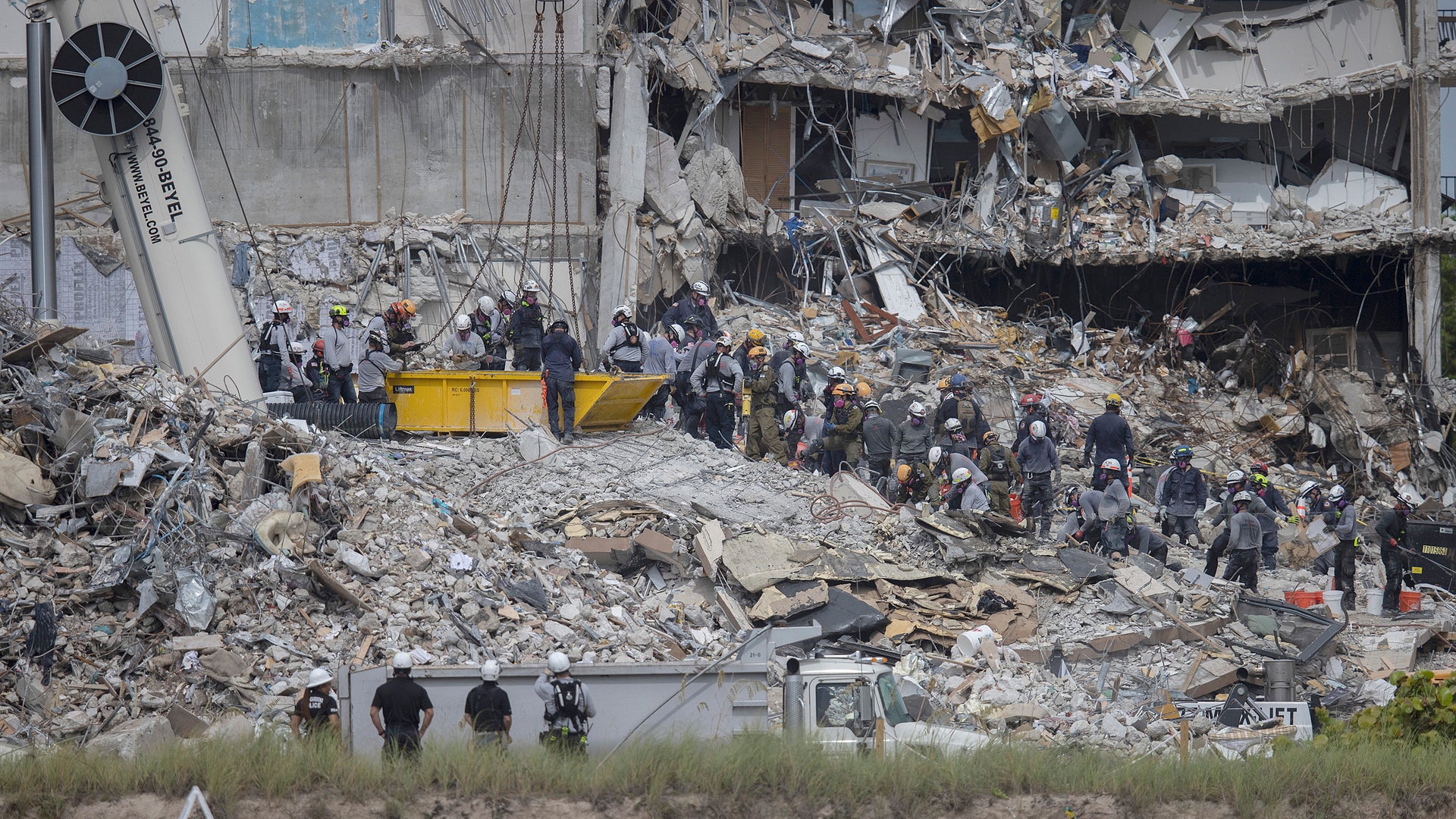
The criminal sphere is even more severe. If the structural failure results in bodily injury or death, the engineer can be charged with negligent bodily harm or negligent homicide, with sentences ranging from two months to eight years of detention depending on severity. The collapse of the Liberdade building in Fortaleza in 2019 is a tragic example where engineers and technical supervisors faced criminal indictment.
Beyond civil and criminal liability, the engineer may also face administrative sanctions from CREA, which include warnings, fines, temporary suspension, and even revocation of professional registration. Revocation means the end of one's career, as it prevents the practice of engineering across the entire national territory. The value of an entire career can be destroyed by a single unverified calculation error.
5How technology and AI are preventing structural errors
The good news is that technology is making it increasingly difficult for calculation errors to go undetected. Modern structural analysis software incorporates multiple layers of automatic verification that alert the designer when results are inconsistent with expected parameters. If a beam shows excessive deflection or a column has a reinforcement ratio above the code limit, the software flags the problem before the design leaves the computer.
Artificial intelligence is taking error prevention to an entirely new level. Machine learning algorithms trained on thousands of structural designs can identify anomalous patterns that a human eye would struggle to catch. For example, an AI can detect that the relationship between a beam's span and its depth is unusual for the type of loading applied, suggesting a review of the input data.
BIM (Building Information Modelling) integrated with structural analysis enables the automatic detection of clashes between disciplines, eliminating one of the largest sources of errors in construction. When a plumbing pipe passes through a structural beam in the digital model, the system identifies the clash immediately, long before the situation materialises on the construction site.
Optimisation tools based on genetic algorithms and neural networks can suggest more efficient and safer structural configurations, reducing exclusive dependence on human judgement. This does not replace the engineer but provides a technological safety net that dramatically minimises the risk of errors reaching the site. At CW Structura Intelligence, we use these technologies to ensure that every design passes through multiple verification layers before reaching the construction site.
6Checklist: how to avoid errors before they happen
The prevention of structural errors begins with well-defined processes and professional discipline. Drawing on decades of experience and failure analysis, we have compiled an essential checklist that every structural engineer should follow rigorously on every project.
The first item is independent verification of input data. Before beginning any calculation, confirm all loads against current codes, verify the soil investigation data, and validate the reference architectural design. Never rely on information passed along verbally; demand formal documentation for every piece of data used in dimensioning.
The second item is peer review. Every critical structural design should be reviewed by a second engineer before being released for construction. Peer review is one of the most effective ways to catch errors, because a fresh pair of eyes spots inconsistencies that the original designer, immersed in the details, may overlook.
The third item is results consistency checking. Before accepting any software output, perform a simplified manual estimate to verify that the order of magnitude makes sense. If the software indicates that a 6-metre span beam requires only 2 bars of 10mm, something is wrong.
The fourth item is version control. Maintain a rigorous log of all project versions, including the date, description of changes, and the signature of the responsible professional. Serious errors occur when the construction site receives an outdated version of the design that had already been corrected.
The fifth item is formal coordination with other disciplines. Hold documented meetings with fellow designers to identify and resolve conflicts before execution.
The sixth and final item is the adoption of advanced technological tools. Use software with automatic code compliance checking, explore AI tools for design review, and adopt BIM for integrated coordination. Technology is not a cost; it is an investment that pays for itself by preventing a single error that could cost hundreds of thousands of reais.
Conclusion
The numbers do not lie: structural calculation errors cost fortunes, destroy careers, and put lives at risk. But the central message of this article is not one of fear; it is one of prevention. Every error discussed here could have been avoided with proper processes, rigorous verification, and the intelligent use of technology. We live in an era where artificial intelligence can review a structural design in minutes, detecting inconsistencies that would take hours to find manually. Ignoring these tools is not economy; it is professional imprudence that can cost half a million reais or more.
Do not let a calculation error put your career and your projects at risk. Contact CW Structura Intelligence and discover how our AI-powered structural analysis solutions can add an extra layer of safety to every project you develop.
Contact UsAbout the Author

Lens Wolph Kenley Ciceron
Lens Wolph Kenley Ciceron is the founder of CW Structura Intelligence, bringing expertise in structural engineering, construction strategy, and AI-driven innovation to the global engineering community.