Cement, Carbon Emissions and Structural Innovation
The Engineering Response to the CO₂ Crisis
1The Carbon Footprint of Cement Production
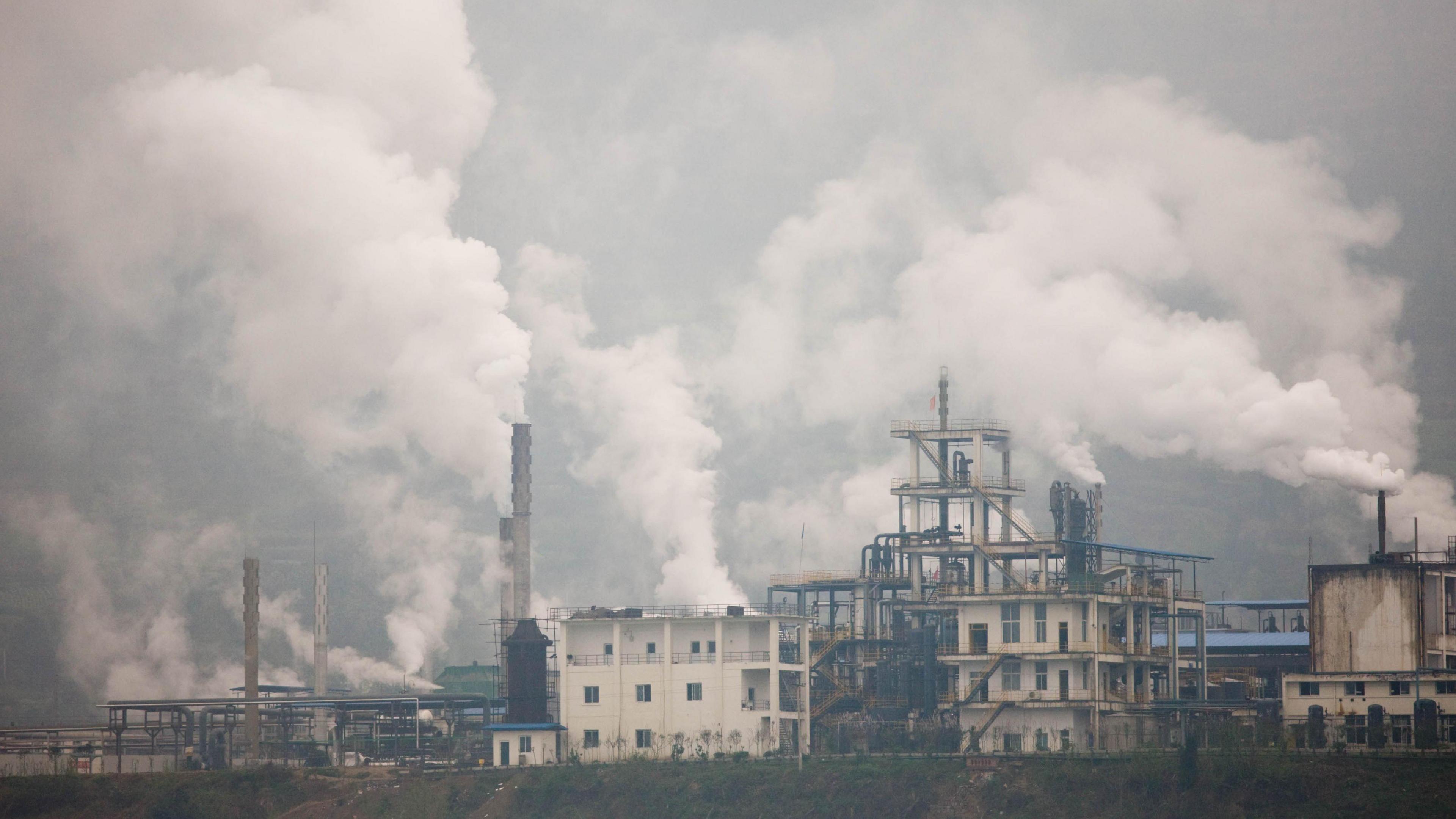
Cement production currently generates approximately 8% of global CO₂ emissions, more than aviation and shipping combined. The scale is staggering: the world produces over 4 billion tonnes of cement annually, with each tonne releasing roughly 600-900 kg of CO₂.
Why Cement Is So Carbon-Intensive:
The carbon intensity of cement stems from two fundamental sources:
- **Process emissions (60-65%)**: The calcination of limestone releases CO₂ as an inherent chemical product
- **Combustion emissions (35-40%)**: Burning fossil fuels to achieve kiln temperatures exceeding 1450°C
Projected Growth:
Global cement demand is expected to increase by 12-23% by 2050, driven primarily by urbanization in developing economies. If production methods remain unchanged, cumulative cement-related emissions between 2020 and 2050 could exceed 75 gigatonnes of CO₂. This would consume a significant portion of the remaining global carbon budget for limiting warming to 1.5°C.
The Infrastructure Paradox:
Here lies the paradox: cement is essential for building climate-resilient infrastructure (seawalls, flood barriers, sustainable housing), yet its production accelerates the very climate change these structures aim to address. Breaking this paradox requires engineering innovation at multiple levels.
2The Chemistry of Emissions: Understanding Calcination
At the heart of cement's carbon problem lies a simple yet immutable chemical reaction. When limestone (calcium carbonate) is heated to approximately 900°C, it undergoes calcination:
**CaCO₃ → CaO + CO₂**
This reaction produces quicklime (calcium oxide), the precursor for clinker, which is cement's active ingredient. The CO₂ released is not a byproduct of inefficient combustion. It is a fundamental product of the reaction itself.
The Thermodynamic Reality:
- For every tonne of clinker produced, approximately 525 kg of CO₂ is released from calcination alone:
- This emission is independent of energy source. Even with 100% renewable energy, calcination emissions persist
- The reaction is endothermic, requiring significant heat input regardless of fuel source
Kiln Temperature Requirements:
Beyond calcination, the formation of clinker minerals (alite, belite, aluminate, ferrite) requires temperatures exceeding 1450°C in rotary kilns. Achieving and maintaining these temperatures traditionally requires:
- Coal 30-40% of energy input in most plants globally:
- Petroleum coke: common supplementary fuel
- Natural gas: lower carbon but still significant emissions
- Alternative fuels: tires, waste, biomass (partial substitution)
Why Electrification Is Complex:
Unlike steel production, where electric arc furnaces offer a clear decarbonization pathway, cement kilns present unique challenges. The continuous flow of raw materials through a rotating kiln at extreme temperatures is not easily replicated with electric heating. Pilot projects exist, but commercial-scale electric kilns remain a decade or more away.
3Carbon Capture and Storage: Promise and Limitations
Carbon Capture and Storage (CCS) has emerged as the cement industry's primary decarbonization strategy. The concept is straightforward: capture CO₂ at the source, compress it, transport it, and sequester it underground. The reality is far more complex.
Investment Requirements:
Decarbonizing the global cement industry through CCS would require capital investments exceeding US$500 billion by 2050. This includes:
- Capture equipment at production facilities
- CO₂ compression and dehydration systems
- Pipeline networks for transportation
- Geological storage site development and monitoring
Energy Penalty:
CCS technology imposes a significant energy penalty on cement production:
- **Energy consumption doubles** when post-combustion capture is implemented
- This additional energy demand creates secondary emissions unless sourced from renewables
- Amine-based capture systems require substantial heat for solvent regeneration
Operational Costs:
Current CCS costs range from US$40 to US$100 per tonne of CO₂ captured, depending on:
- Technology type (post-combustion vs. oxy-fuel)
- Proximity to storage sites
- Plant scale and utilization rates
- Local energy costs
Environmental and Geological Risks:
- Storage capacity uncertainty Global estimates of suitable geological storage vary by orders of magnitude:
- **Long-term liability**: CO₂ must remain sequestered for millennia; monitoring and remediation responsibilities are unclear
- **Induced seismicity**: Large-scale injection has triggered measurable seismic events in some locations
- **Leakage risk**: Any significant leakage undermines the entire climate benefit
Why CCS Alone Is Insufficient:
Even with aggressive CCS deployment, several factors limit its effectiveness: 1. **Timeline mismatch**: CCS infrastructure requires 10-15 years to deploy at scale; emissions reductions are needed immediately 2. **Geographic limitations**: Not all cement plants are near suitable storage geology 3. **Capture rate ceiling**: Most CCS systems achieve 85-90% capture efficiency, leaving residual emissions 4. **Economic viability**: Without carbon pricing above $80-100/tonne, CCS struggles to compete with unabated production
CCS is a necessary component of cement decarbonization, but it cannot be the sole strategy. The engineering community must pursue complementary approaches with more immediate impact.
4Structural Optimization: The Real Emissions Reduction Strategy
The most immediate and cost-effective pathway to reducing cement-related emissions is deceptively simple: **use less cement**. This is not about compromising structural integrity. It is about eliminating material waste through intelligent design.
The Scale of Overdesign:
Studies indicate that structural engineers routinely specify 30-50% more concrete than strictly necessary for safety requirements. This overdesign stems from:
- Conservative interpretation of building codes
- Standardized member sizes for construction convenience
- Inadequate optimization tools in traditional workflows
- Risk aversion without quantified safety margins
Material Efficiency as Carbon Strategy:
Reducing cement consumption by 30% across global construction would achieve emissions reductions equivalent to deploying CCS on 40% of cement plants, at a fraction of the cost and with immediate effect.
Topology Optimization Fundamentals:
Modern computational methods enable engineers to identify optimal material distributions that satisfy structural requirements with minimum mass. The mathematical formulation is elegant:
**Minimize: C = FᵀU** **Subject to: V ≤ V₀**
Where:
- **C** = Compliance (inverse of stiffness, measuring structural flexibility)
- **F** = Applied force vector
- **U** = Displacement vector
- **V** = Total material volume
- **V₀** = Volume constraint (target material quantity)
This optimization finds the material layout that maximizes stiffness for a given volume. Equivalently, it minimizes material for a required stiffness level.
Practical Applications:
- Slabs and floor systems Ribbed, waffle, and voided slabs reduce concrete volumes by 25-40% compared to solid slabs:
- **Columns and walls**: Variable-section members optimize material distribution along load paths
- **Beam design**: Post-tensioning and optimized cross-sections reduce concrete and reinforcement quantities
- **Foundations**: Optimized geometries reduce material while maintaining bearing capacity
5AI-Driven Structural Design and Topology Optimization
Artificial intelligence transforms structural optimization from an academic exercise into a practical design tool. Where traditional optimization requires hours of computation for single load cases, AI-accelerated methods evaluate thousands of configurations in minutes.
Machine Learning in Structural Optimization:
- Surrogate modeling Neural networks trained on FEA results predict structural performance 100-1000x faster than direct simulation:
- **Generative design**: AI algorithms propose novel structural configurations that human designers might not consider
- **Multi-objective optimization**: Simultaneously optimize for cost, carbon, constructability, and structural performance
- **Uncertainty quantification**: AI models incorporate material variability and load uncertainty into optimization
Integration with BIM and Digital Workflows:
AI optimization tools integrate with Building Information Modeling (BIM) platforms, enabling:
- Automated design iteration without manual modeling
- Real-time carbon footprint tracking during design development
- Clash detection and constructability analysis of optimized geometries
- Seamless transfer to fabrication and construction documentation
**Case Study: Optimized Floor System**
A recent project comparing traditional flat slab design against AI-optimized voided slab demonstrated:
- **35% reduction** in concrete volume
- **28% reduction** in embodied carbon
- **15% reduction** in structural steel reinforcement
- **Equivalent performance** for serviceability and ultimate limit states
The Designer's Role:
AI does not replace engineering judgment. It amplifies it. The structural engineer defines constraints, performance criteria, and priorities. The AI explores the solution space efficiently. The engineer evaluates, refines, and ultimately takes responsibility for the design. This human-AI collaboration represents the future of structural practice.
6Alternative Cementitious Materials: Beyond Portland Cement
While optimization reduces material quantity, alternative binders can dramatically reduce the carbon intensity per unit of cement used. Several technologies have reached commercial viability.
LC³ (Limestone Calcined Clay Cement):
LC³ replaces up to 50% of clinker with a combination of calcined clay and limestone:
- **40% reduction** in CO₂ emissions compared to ordinary Portland cement
- Uses globally abundant raw materials
- Compatible with existing production infrastructure
- Meets performance requirements for most structural applications
- Already deployed in India, Cuba, Colombia, and pilot projects worldwide
Geopolymers:
Geopolymer binders eliminate clinker entirely, using alkali-activated aluminosilicates:
- **80-90% reduction** in CO₂ emissions
- Produced from industrial byproducts (fly ash, slag) or natural materials (metakaolin)
- Excellent fire resistance and chemical durability
- Challenges: alkali activator availability, setting time control, standardization
- Application: precast elements, specialized applications, growing acceptance for structural use
Fly Ash and Slag Blends:
Supplementary cementitious materials (SCMs) have been used for decades:
- **Fly ash**: Coal combustion byproduct, 20-35% replacement typical, up to 60% in high-volume applications
- **Ground granulated blast furnace slag (GGBS)**: Steel industry byproduct, 50-70% replacement common
- **Silica fume**: Ferrosilicon production byproduct, used for high-performance concrete
Limitations of SCM Availability:
As coal power generation declines (a positive development), fly ash supply will diminish. Steel industry decarbonization may similarly affect slag availability. The industry must transition to calcined clays and other alternatives that do not depend on declining industrial byproducts.
Carbon-Cured Concrete:
Emerging technologies inject CO₂ during concrete mixing or curing:
- CO₂ reacts to form calcium carbonate, sequestering carbon in the concrete
- Current systems achieve 5-10% reduction in net emissions
- Does not eliminate emissions but provides partial offset
- Growing commercial deployment in precast operations
7Carbon Taxation and Economic Implications
The transition to sustainable cement requires economic incentives that reflect the true cost of carbon emissions. Carbon pricing mechanisms are accelerating globally.
Current Carbon Pricing Landscape:
- EU Emissions Trading System (ETS) Prices have exceeded €80/tonne CO₂, with cement covered under CBAM (Carbon Border Adjustment Mechanism):
- **North America**: Regional markets (California, Quebec, RGGI) with emerging federal discussions
- **China**: National ETS launched 2021, gradually expanding coverage
- **Emerging markets**: South Africa, Colombia, Mexico implementing carbon taxes
Impact on Cement Economics:
At €80/tonne CO₂, cement production costs increase by approximately:
- **€48-72 per tonne** of cement (depending on clinker ratio)
- This represents a **40-60% cost increase** for standard cement
- Low-carbon alternatives become economically competitive
Strategic Implications for Specifiers:
Engineers and architects who specify low-carbon materials and optimize structural designs position their clients for:
- Reduced exposure to carbon price volatility
- Compliance with increasingly stringent building codes
- Access to green financing and sustainability certifications
- Competitive advantage in markets valuing environmental performance
The Business Case for Low-Carbon Engineering:
Firms that develop expertise in structural optimization and low-carbon materials will capture growing market share as:
- Governments mandate embodied carbon limits in procurement
- Corporate sustainability commitments drive private sector demand
- Green building certifications reward material efficiency
- Carbon disclosure requirements increase scrutiny on construction emissions
Conclusion
The cement-carbon challenge cannot be solved by any single technology or policy. It requires a portfolio approach: aggressive deployment of CCS where viable, widespread adoption of alternative binders, and, most critically, structural optimization that eliminates material waste at the design stage. For structural engineers, this moment presents both responsibility and opportunity. The buildings and infrastructure we design today will shape emissions trajectories for decades. By embracing AI-driven optimization, specifying low-carbon materials, and challenging unnecessary conservatism in design, we can deliver structures that meet performance requirements with a fraction of the carbon footprint. The engineering profession has always adapted to new challenges (seismic codes, sustainability metrics, digital workflows). The carbon transition is the defining challenge of our generation. Those who lead this transition will not only contribute to climate mitigation but will also define the future of structural practice. **At CW Structura Intelligence, we integrate advanced structural analysis with carbon-conscious design principles. Our services help clients optimize material usage, evaluate alternative materials, and deliver projects that perform excellently while minimizing environmental impact.**
Ready to reduce the carbon footprint of your structural designs? Contact CW Structura Intelligence for expert consultation on sustainable engineering strategies.
Contact UsAbout the Author

Lens Wolph Kenley Ciceron
Lens Wolph Kenley Ciceron is the founder of CW Structura Intelligence, bringing expertise in structural engineering, construction strategy, and AI-driven innovation to the global engineering community.